Ideation & Planning with AI
Using AI to plan before you build
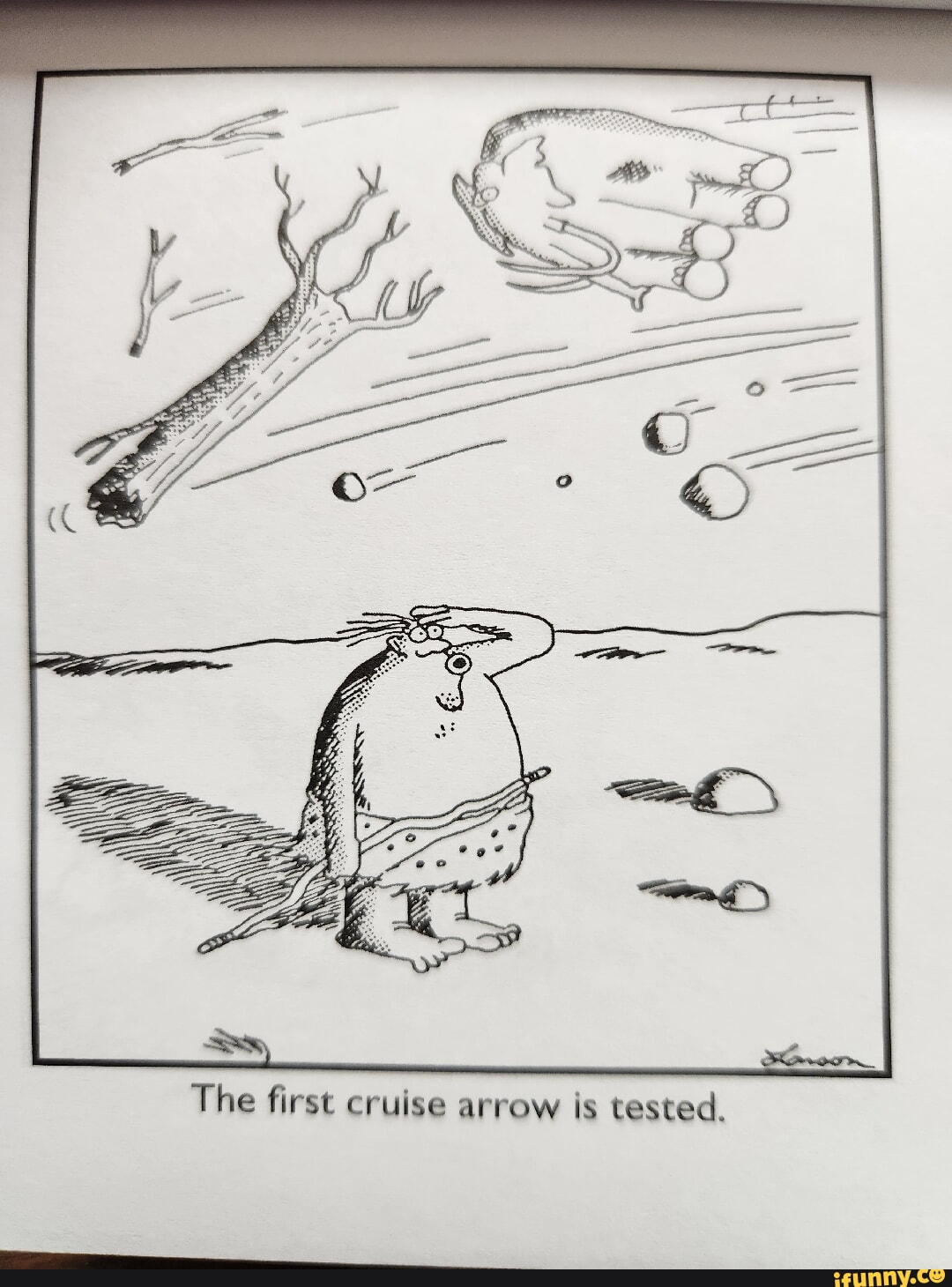
Top engineers at Anthropic, OpenAI say AI now writes 100% of their code
Fortune - January 29, 2026Reading Recap: "Management as AI Superpower"
Ethan Mollick's key insight: As AI handles more execution, your job shifts from doing to delegating
- The equation: Human Baseline Time vs. AI Process Time x Probability of Success
- Management skills are AI skills — scoping problems, defining deliverables, evaluating output
- Subject matter expertise matters — experts give better instructions, spot errors faster
- "Soft" skills are the hard ones — knowing what good looks like and explaining it clearly
"The people who thrive will be the ones who know what good looks like — and can explain it clearly enough that even an AI can deliver it."
Today we practice exactly this: scoping, planning, and defining deliverables with AI
What We'll Cover Today
Part 1
Ideation with AI
Generate ideas you wouldn't think of alone
The Ideation Funnel
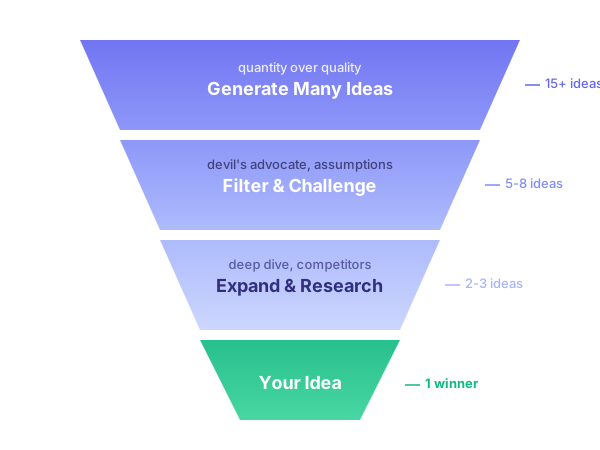
Why Ideate with AI?
- Broad knowledge across domains
- Generates ideas you wouldn't think of
- Fast iteration on concepts
- No judgment - explore "bad" ideas safely
- Combines concepts from different fields
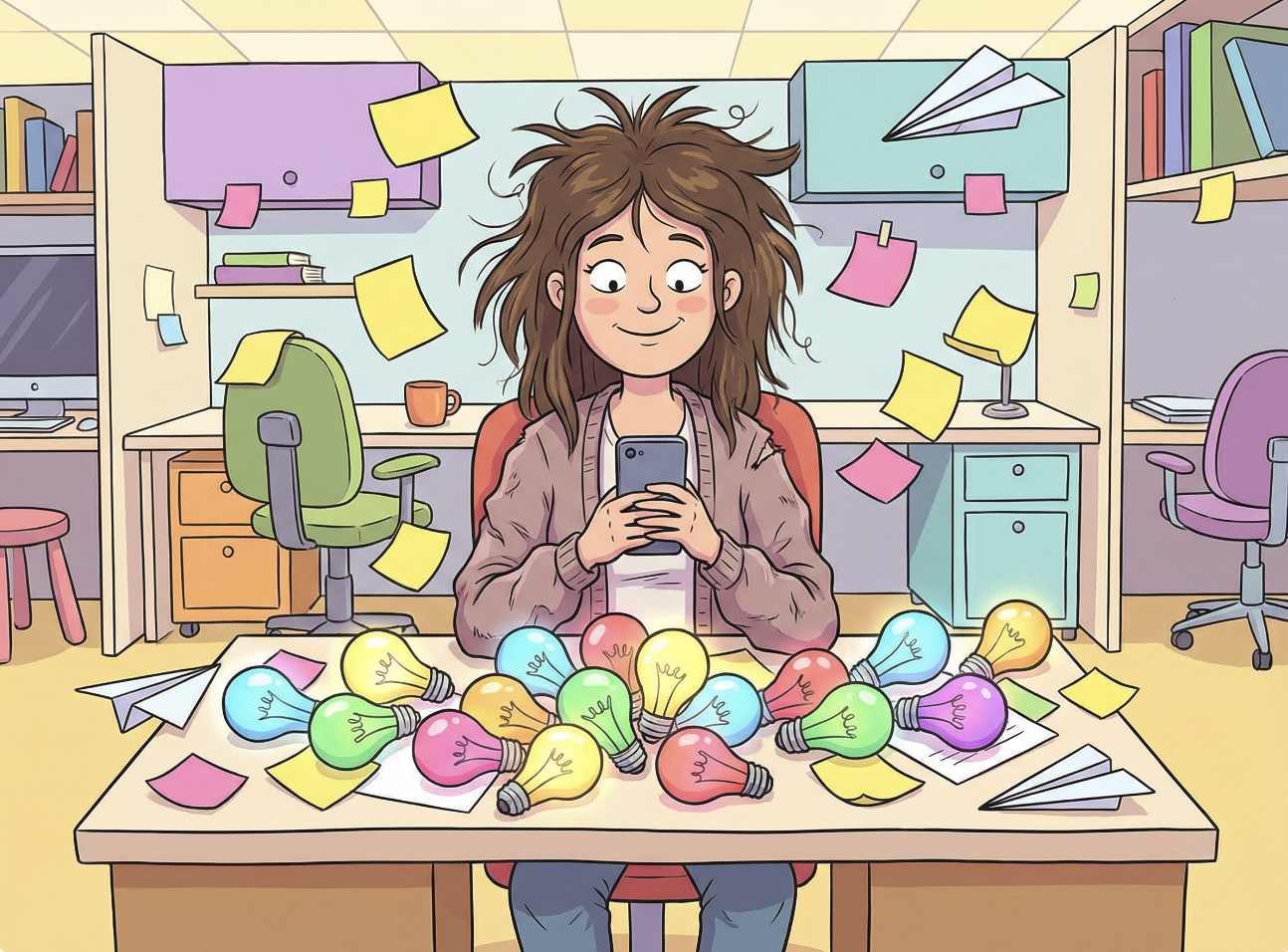
Technique: Quantity Generation
I want to build something that helps
college students manage their time.

Give me 15 different product ideas, ranging
from simple apps to ambitious platforms.

Include at least 3 ideas that seem
"weird" or unusual.
Technique: Constraint-Based Ideation
I need a solution for [problem] that:
- Can be built by 3 students in 8 weeks
- Requires no budget for infrastructure
- Works offline
- Doesn't require user accounts

Generate 10 ideas that fit ALL these constraints.
Technique: Combination Ideation
Combine these two concepts:
- Concept A: Habit tracking apps
- Concept B: Social accountability

What would a product look like
that merges these approaches?

Generate 5 product ideas.
Expanding Ideas: Deep Dive
I'm considering building [idea].

Help me explore:
1. 5 different ways this could work
2. 3 different user personas it might serve
3. The simplest possible version
4. The most ambitious version
5. Similar products and how this differs
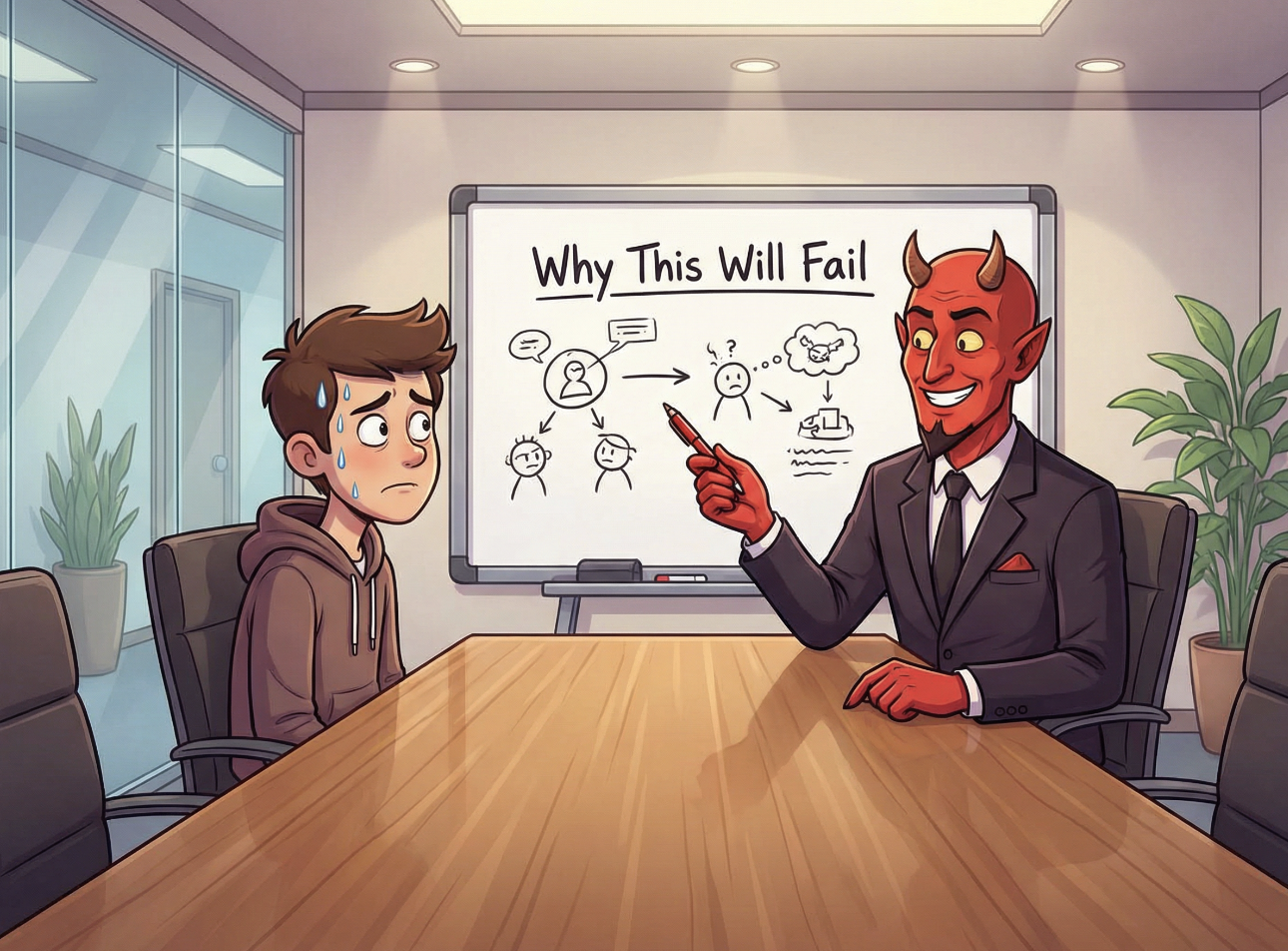
Challenging Ideas: Devil's Advocate
Here's my product idea: [description]

Play devil's advocate. Tell me:
- Why this might fail
- What assumptions might be wrong
- Who wouldn't want to use this
- What's the hardest part
  I'm underestimating
Assumption Testing
My product assumes that [assumption].

Is this assumption valid?

What evidence supports or contradicts it?

What would happen if this assumption is wrong?
Part 2
Market Research with Perplexity
Web-connected research with citations
Claude and Gemini also work well for this when used in web search mode
Research to PRD Flow
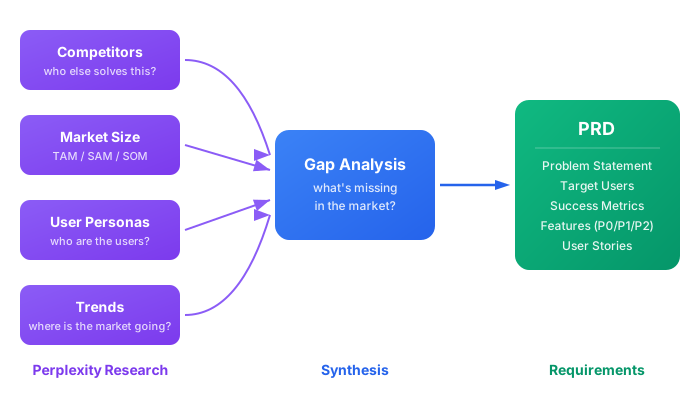
Why Perplexity?
| Feature | Benefit |
|---|---|
| Web-connected | Current information |
| Citations | Verify sources |
| Synthesis | Multiple sources combined |
| Structured | Good for analysis |
Perfect for competitive research
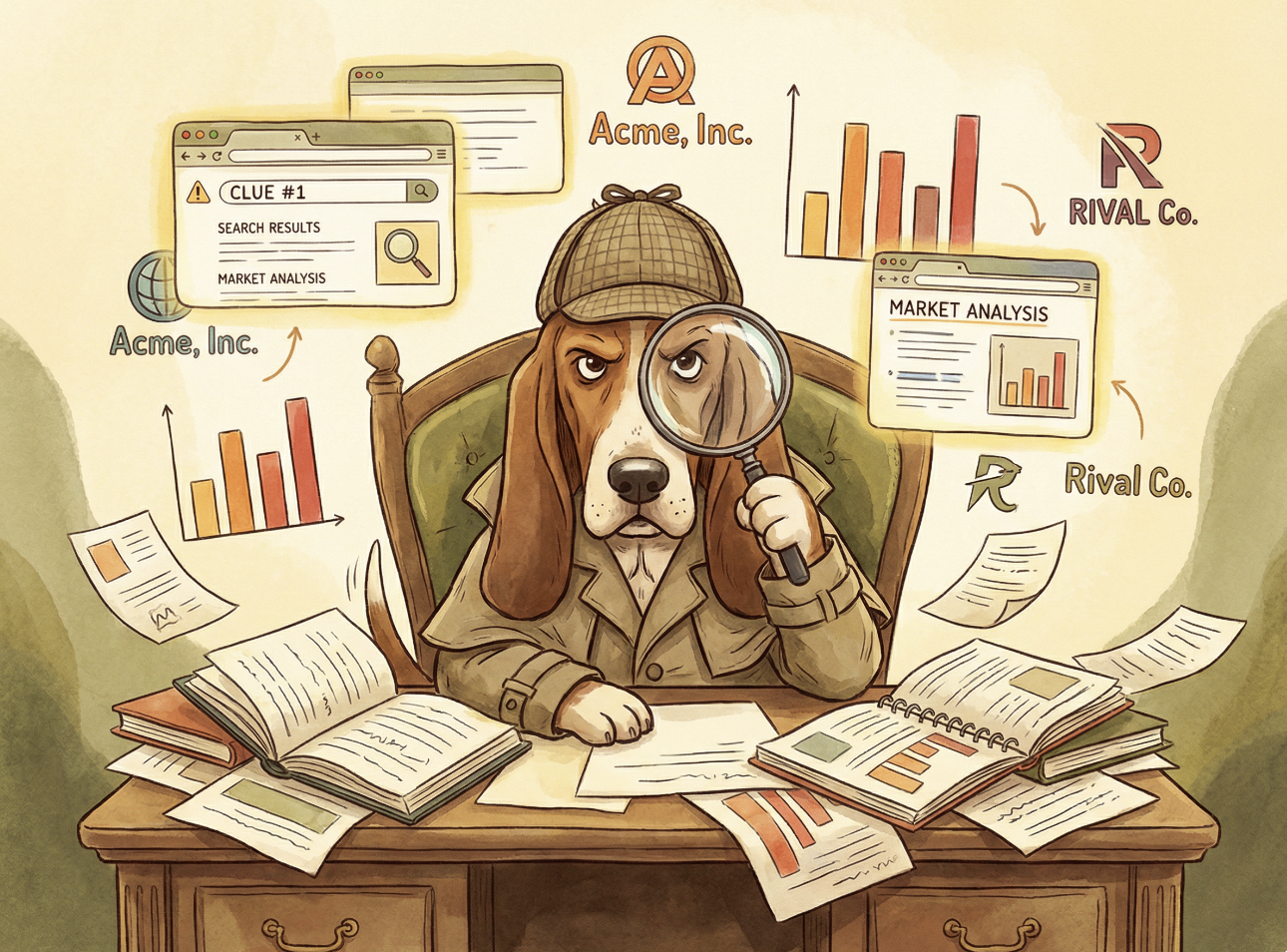
Finding Competitors (Remember - from Click!)
What companies and products currently solve [problem]?

For each, tell me:
- Company name and product
- Pricing model
- Target audience
- Key features
- What users complain about (from reviews)

Also identify:
- Substitute solutions (workarounds instead of a product)
- The "do nothing" option (tolerating the problem)
- The "800-pound gorilla" (strongest alternative)
Competitive Positioning
I'm building [product description].

Compare to [Competitor A], [B], and [C].

Create a comparison table:
- Features
- Pricing
- Target user
- Strengths
- Weaknesses

Where is the gap in the market?
Market Size (TAM/SAM/SOM)
Help me estimate market size for [category]:

TAM (Total Addressable Market):
  Everyone who could possibly use this

SAM (Serviceable Addressable Market):
  The segment we can reach

SOM (Serviceable Obtainable Market):
  Realistic first-year target

Provide numbers with sources.
User Personas
I'm building [product] for [general audience].

Develop 3 detailed user personas:
- Name and demographics
- Job/role and daily challenges
- Goals and motivations
- Pain points my product addresses
- How they currently solve this
- What would make them switch
- Potential objections
Trend Analysis
What are the trends in [industry/category]
over the past 3 years?

Is this market growing, shrinking, or stable?

What's driving the changes?

What do analysts predict for the next 2-3 years?
Founding Hypothesis (Remember - from Click!)
Synthesize your research into one testable statement
For [target customer], who has [problem],
our [approach] will solve it better than [competition]
because [differentiation].
Score it:
- Is the customer specific enough?
- Is the problem verified, not assumed?
- Will people choose this over alternatives AND doing nothing?
- Is the differentiation radical or incremental?
If you can't write a compelling hypothesis, you don't understand your market yet
Part 3
Project Documentation
PRD, plans, roadmaps, and MVP
Document Hierarchy
┌───────────────────────────────────┐
│ Project Description               │  ← 1-2 paragraphs
├───────────────────────────────────┤
│ PRD (Product Requirements Doc)    │  ← What & Why
├───────────────────────────────────┤
│ Plan Doc                          │  ← What & How
├───────────────────────────────────┤
│ Roadmap Doc                       │  ← Checklist
├───────────────────────────────────┤
│ MVP Definition                    │  ← Minimum viable
├───────────────────────────────────┤
│ Architecture Doc                  │  ← How it's built
└───────────────────────────────────┘
Project Description
The Elevator Pitch
Help me write a project description for:
[explain your idea in casual terms]

Create 2 paragraphs including:
- What problem it solves
- Who it's for
- How it works (high level)
- Why it's different/better

Make it compelling in 30 seconds.
PRD Structure
1. Problem Statement
2. Target Users
3. Goals and Success Metrics
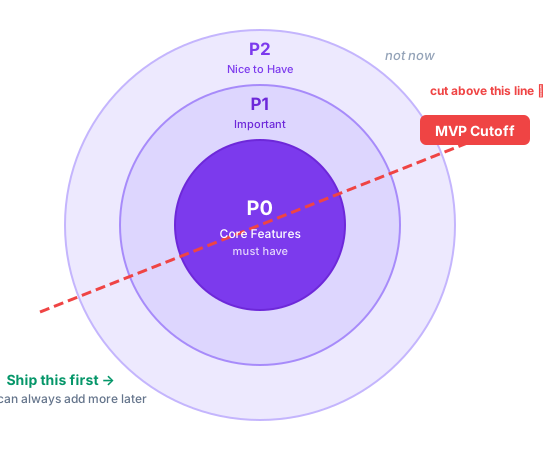
4. Key Features (P0, P1, P2)
5. User Stories
6. Out of Scope
7. Risks and Mitigations
8. Timeline and Milestones
PRD Creation Prompt
Based on this project idea: [description]

Create a PRD with:
- Problem statement
- Target users (primary, secondary, NOT for)
- Success metrics
- Features by priority (P0/P1/P2)
- 5+ user stories
- What's explicitly out of scope
- Key risks
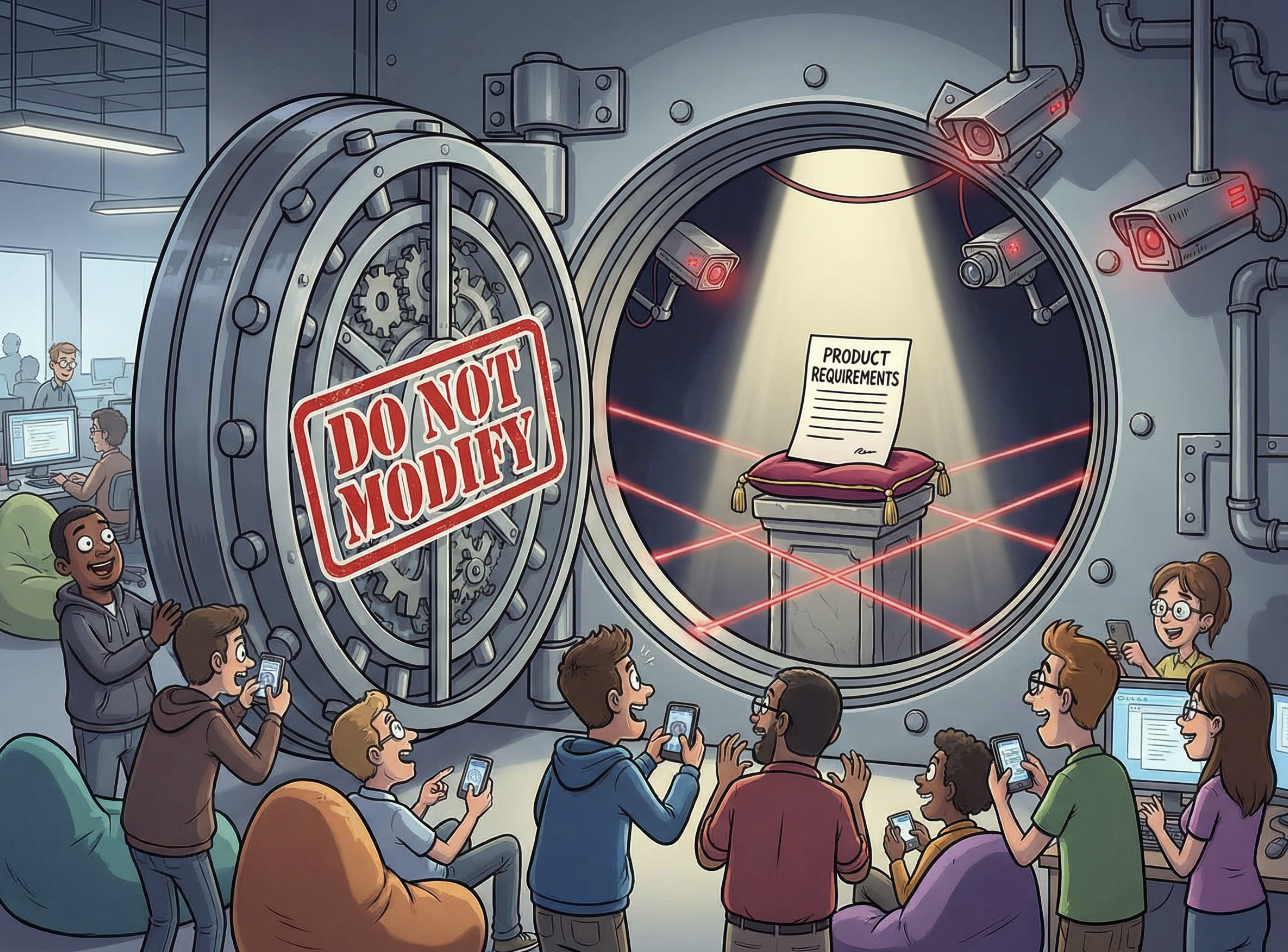
PRD as Immutable Source of Truth
Why?
- PRD captures original requirements and intent
- Other docs change; PRD should not
- Maintains "long-term memory" of what we agreed
- If requirements change: new PRD version or addendum
In Practice
Plan Documents: The WHAT and HOW
Purpose: Detailed work breakdown and implementation approach
Prompt: "Create a detailed plan doc for this work.
Store it in ai/roadmaps/ with date prefix (YYYY-MM-DD).

The plan should include:
- Work breakdown (what needs to be done)
- Implementation approach (how it will be done)
- Technical considerations
- Dependencies and prerequisites
ai/roadmaps/2025-12-05_feature-name_plan.md
Roadmap Documents: The Checklist
Purpose: Task checklist organized by phases to keep on track
Prompt: "Create a concise roadmap doc for this work.
Store it in ai/roadmaps/ with date prefix (YYYY-MM-DD).

The roadmap should include:
- Checklist of tasks organized by phases
- Clear completion criteria for each task
- Dependencies between tasks
ai/roadmaps/2025-12-05_feature-name_roadmap.md
Plan vs Roadmap
| Plan | Roadmap |
|---|---|
| The WHAT and HOW | The checklist |
| Detailed work breakdown | Task list by phases |
| Implementation approach | Clear completion criteria |
| Technical considerations | Progress tracking |
| For understanding | For execution |
The Research Phase
Document before you plan
For complex tasks, research first — document what exists with no opinions
Review ai/context.md.
Then research how [feature/area] currently works.

Document what you find. DO NOT suggest changes.
Save to ai/roadmaps/YYYY-MM-DD_topic_research.md
External research: Use Context7/Perplexity MCP tools to pull current library docs into ai/guides/
When to use: Complex changes, unfamiliar code, third-party libraries | Skip for: Simple changes, greenfield projects
PRD → Research → Plan → Roadmap Pipeline
In Practice
MVP Definition
Be Ruthless About Scope
Here's my PRD: [reference]

Define the MVP:
1. What's the ONE core problem to solve?
2. Minimum feature set?
3. What can we cut that feels
   important but isn't?
4. Simplest technical approach?
5. How will we validate with users?

We have [X weeks] and [Y team members].
MVP Reality Check
Here's my MVP feature list:
[list features]

I have [X weeks] with [Y developers].

Is this realistic?
- What should I cut?
- What am I underestimating?
- What's the TRUE minimum?
MVP Scope
Mermaid Diagrams (Optional)
- Why Mermaid?
- Text-based diagrams in markdown
- AI can create, read, and modify them
- Version controllable (just text)
- De facto standard for documentation
Create a Mermaid diagram showing the
system architecture for [project].
Business Model Canvas (Optional)
Create a Business Model Canvas for [project]:

1. Value Proposition
2. Customer Segments
3. Channels
4. Customer Relationships
5. Revenue Streams
6. Key Resources
7. Key Activities
8. Key Partners
9. Cost Structure
Part 4
Git Workflow Concepts
Version control for AI-assisted development
Why Git Matters for AI Development
AI needs to understand version control:
- Reads your git history to understand changes
- Can commit code with meaningful messages
- Can create branches for features
- Can review uncommitted changes
- Works with PR workflows
Not just a backup system - it's collaboration infrastructure
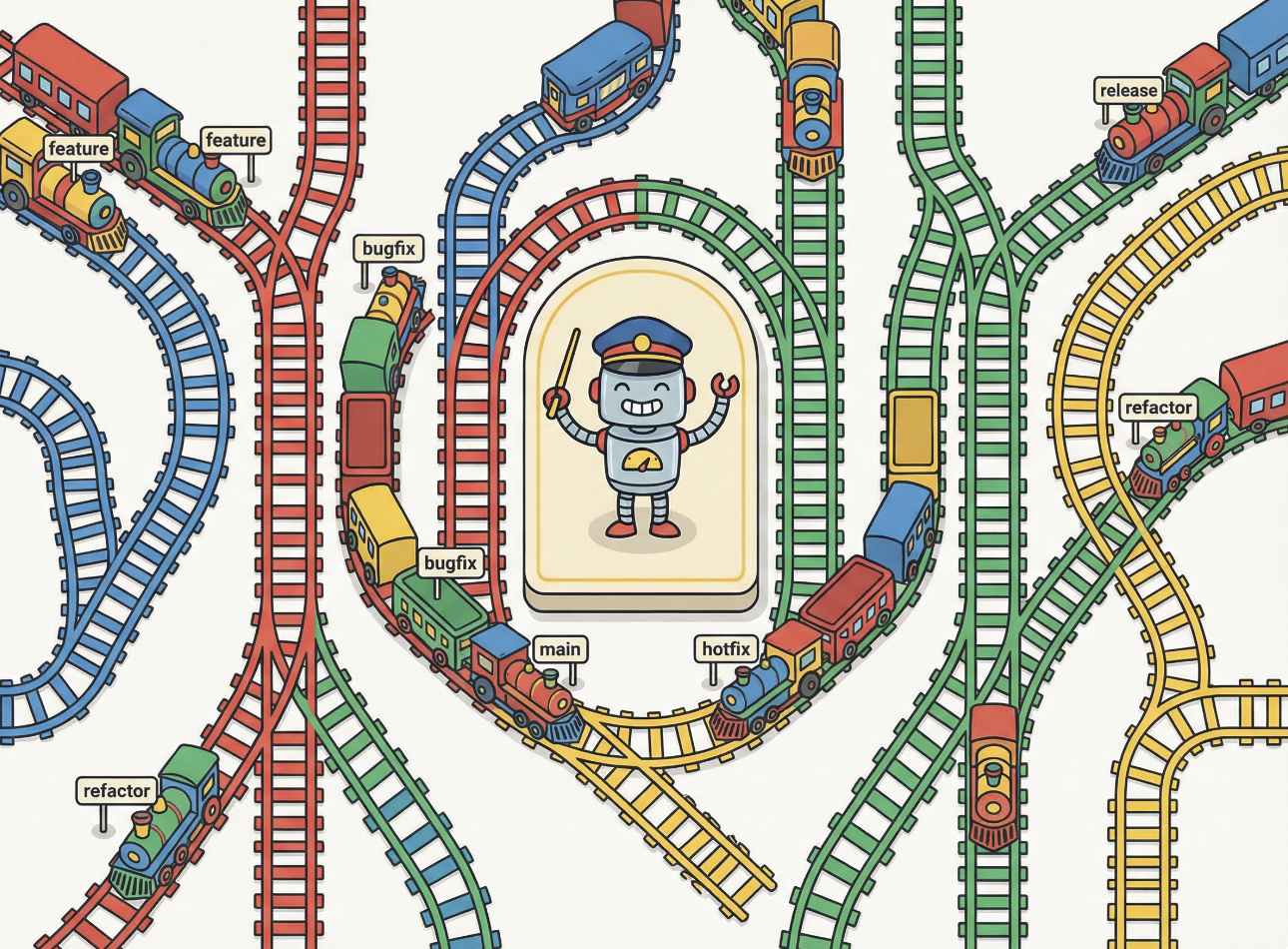
Branching Mental Model
main ─────●───────●───────●────────▶
           \             /
            \           /
    feature  ●─────●───●
            [AI develops here]
main= production-ready code- Feature branches = isolated work
- AI can work on branches without breaking main
- Merge when ready
Commit Patterns with AI
AI can create meaningful commits:
Prompt: "Please commit the changes we just made
with a clear commit message explaining what was done."
AI generates:
git commit -m "Add user authentication with JWT

- Implement login/logout endpoints
- Add token validation middleware
- Update user model with password hashing"
PR Workflow (Conceptual)
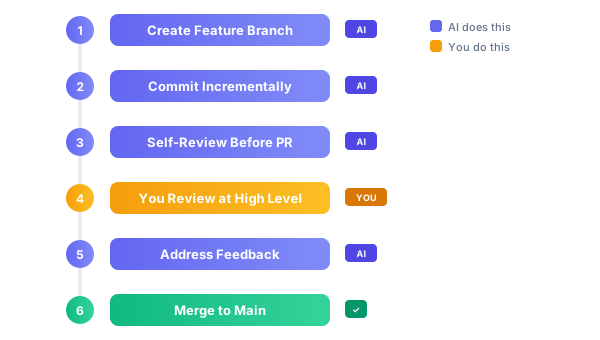
We'll practice this hands-on in Dev Unit 3
Git as Your Review Tool
When AI modifies your codebase, git diff is how you understand what it actually did
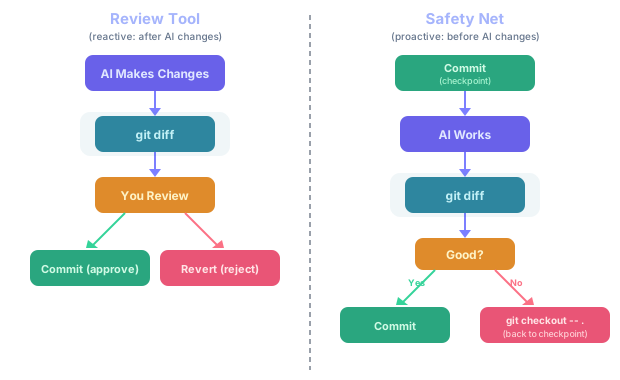
Reviewing AI's Work
git status          # What files were changed?
git diff            # What exactly changed?
git diff --stat     # Summary: files and lines changed
git log --oneline   # What has AI committed so far?
This is your most important job as the human in the loop
Git as Your Safety Net
git diffgit commitgit checkout -- . (revert to checkpoint)Rule of thumb: Commit before every major AI task — treat commits as save points
Part 5
Iterative Refinement
Making documentation better through iteration
The Refinement Cycle
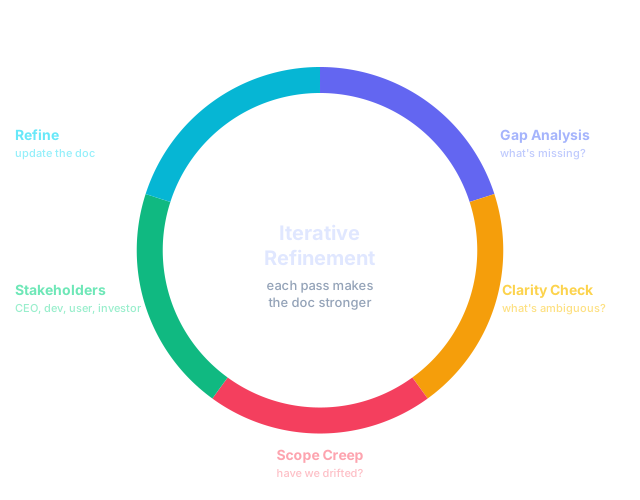
Gap Analysis
Review this PRD: [paste]

What's missing?

What questions would a developer have
that aren't answered here?

What assumptions need to be stated explicitly?
Clarity Check
Read this spec as if you're a developer
who needs to implement it.

What's unclear?
What could be interpreted multiple ways?

Rewrite any ambiguous sections
to be crystal clear.
Scope Creep Detection
Compare this MVP definition to the
original problem statement.

Are we solving the original problem,
or have we drifted?

What features don't directly serve
the core problem?
Stakeholder Perspectives
Review this PRD from these perspectives:

1. As the CEO: Is the business case strong?
2. As lead developer: Is this buildable?
3. As a user: Would I actually use this?
4. As an investor: Is this worth funding?

What concerns would each raise?
Differentiation Check (Remember - from Click!)
Look at our product positioning:
1. Two most important dimensions customers use
   to evaluate solutions in this space?
2. Plot our product and 3 competitors on a 2x2
3. Are we in a quadrant alone, or clustered?
4. If clustered: differentiation isn't radical enough.
   How could we reframe to stand alone?